

In the gold trade, purity is money. The price of every bar, nugget or doré lot is calculated from how much pure gold it actually contains. A difference of just one percentage point on a kilogram of gold can be worth more than a thousand US dollars.
That is why professional buyers do not rely on stamps or promises. They test. This guide explains how gold purity is expressed, the main methods used to test it and how accurate each one is. It also covers how raw gold and doré are sampled, how purity results set the final price, and what happens when buyer and seller get different results.
It is written by Noble Ore Mining, a Ugandan gold producer that has tested and sold gold from its own mines since 2010.
The two questions are related but not the same:
A genuine bar can still be lower in purity than its stamp claims. Raw gold and doré are always genuine gold mixed with other metals, so their purity must be measured, not assumed. For pricing, purity is what matters.
Gold purity is described in three ways:
To convert karats to purity, divide by 24. For example, 18 ÷ 24 = 0.75, so 18 karat gold is 75% gold, or 750 fineness.
| Karats | Purity | Fineness (stamp) | Common use |
|---|---|---|---|
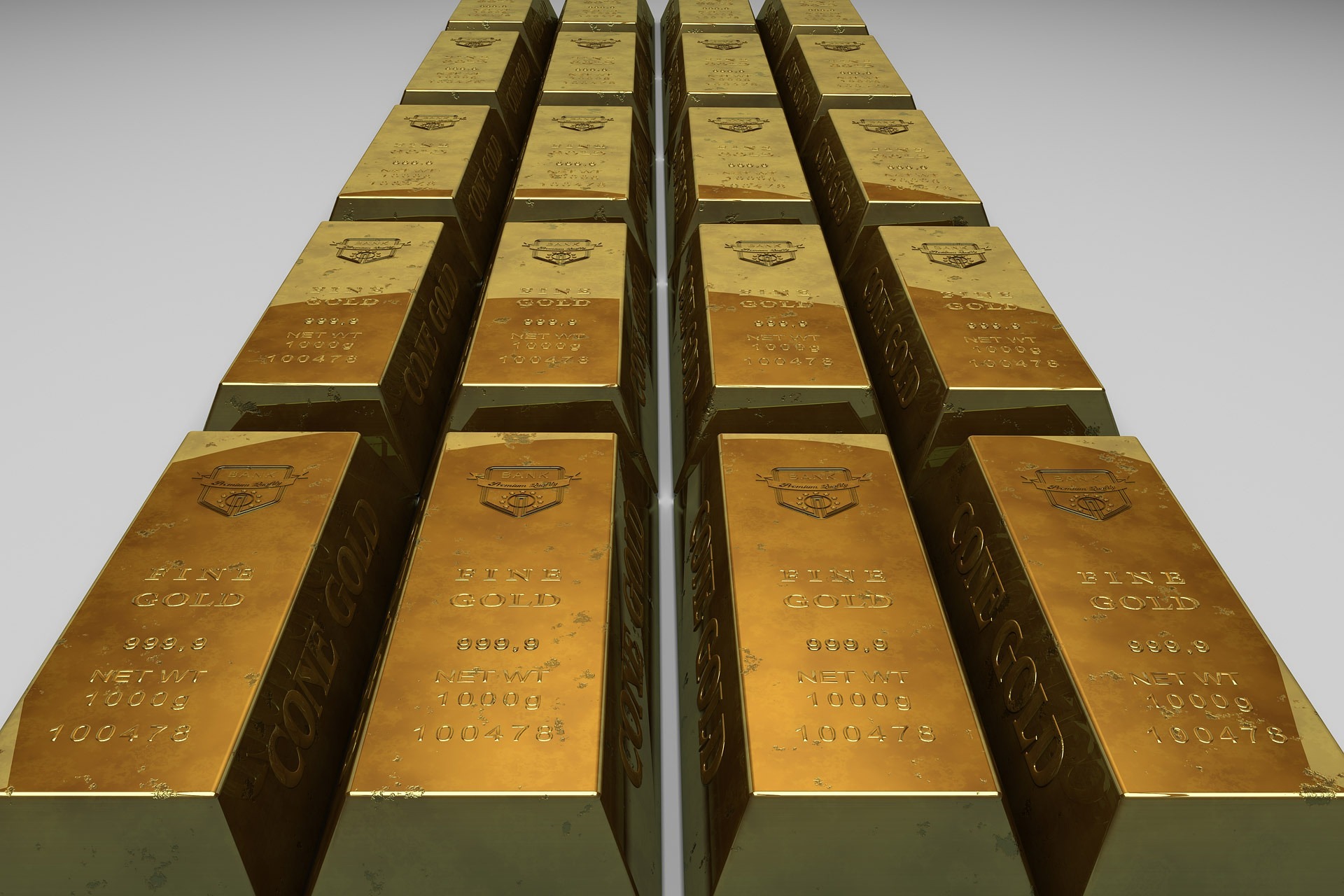
| 24K | 99.5% to 99.99% | 995, 999, 999.9 | Investment bars, refined gold |
| 22K | 91.7% | 916 | Jewellery, some coins |
| 21K | 87.5% | 875 | Jewellery, Middle East |
| 18K | 75.0% | 750 | Fine jewellery |
| 14K | 58.5% | 585 | Jewellery |
| 10K | 41.7% | 417 | Low-cost jewellery |
Note that “24 karat” covers everything from 99.5% to 99.99% purity. For investment and trading, always ask for the exact fineness.
Not every test gives you a number you can price gold on. Some give an exact percentage. Others only give a rough range.
Fire assay (cupellation). The reference method for gold purity. A small, accurately weighed sample is melted with lead and other fluxes, then heated in a cupel so the base metals are absorbed or burned off. Silver is then dissolved away with acid, and the pure gold that remains is weighed on a precision balance. Comparing the final weight with the starting weight gives the purity to a very high precision. Fire assay measures the whole sample, not just the surface, which is why refiners and international markets trust it.
ICP spectrometry. For very pure gold, such as 99.99%, the gold content is too close to 100% to measure directly with enough precision. Instead, laboratories use inductively coupled plasma (ICP) instruments to measure the tiny amounts of each impurity, such as silver, copper, iron and lead, and subtract them from 100%. This gives a precise result for high-purity bars.
X-ray fluorescence (XRF). XRF analysers read the metals in the gold’s surface in seconds without damaging it, and give a percentage reading. For solid, uniform gold, XRF is fast and useful. But it only reads a thin surface layer, so plating, surface treatment or uneven metal can give misleading results. XRF is excellent for screening and sorting, but it is not a substitute for fire assay when setting a price.
Acid (touchstone) test. The gold is rubbed on a black stone and tested with acids of known strength. The result is a karat range, not an exact purity. It is useful for jewellery and quick checks, but not for pricing bullion or doré.
Electronic testers. Handheld testers give a quick karat estimate based on electrical properties. Like the acid test, they read only the surface and give an approximate range.
Density (specific gravity). Measuring density can estimate the gold content of a simple gold alloy, and it is useful for spotting obvious fakes. But different metals in an alloy affect density differently, so it cannot give an exact purity.
| Method | Result type | Reads | Damages sample? | Suitable for pricing? |
|---|---|---|---|---|
| Fire assay | Exact percentage | Whole sample | Yes (small sample) | Yes, the reference method |
| ICP spectrometry | Exact percentage (by impurities) | Whole sample | Yes (small sample) | Yes, for 99.9%+ gold |
| XRF | Percentage | Surface only | No | Screening only |
| Acid test | Karat range | Surface only | Slightly | No |
| Electronic tester | Karat range | Surface only | No | No |
| Density | Estimate | Whole item | No | No |
Refined bars are uniform, so a small sample represents the whole bar well. Doré and raw gold are different. They are mixtures of gold, silver and other metals, and these metals can separate unevenly as the bar cools. A sample from the surface or one corner may not represent the whole bar.
That is why the sampling method matters as much as the test itself. The two standard approaches are:
The sample is then assayed, usually by fire assay, for both its gold and silver content, since silver in doré also has value.
When buying doré or raw gold, always agree in advance which sampling method will be used, who will take the sample, and who will witness it.
Gold is paid for by its fine gold weight: the gross weight multiplied by the purity.
Fine gold weight = gross weight × purity
A 1 kg kilobar holds about 32.15 troy ounces. At 99.5% purity, it contains about 31.99 troy ounces of fine gold.
Small differences in purity add up quickly. Take two 1 kg doré bars, one assayed at 85% and the other at 87%:
This is why buyers and sellers both want an accurate, independent assay, and why the assay method should always be written into the contract.
Even good laboratories rarely produce identical results. Professional gold and doré contracts deal with this through a standard process:
Agreeing these rules before any gold changes hands prevents disputes and protects both sides.
Noble Ore Mining is a fully registered private company specialising in gold mining and export. Established in 2010, we have more than 15 years of experience. Our office is at Kingdom Kampala, and our mines are in the Mubende and Kassanda Districts of Central Uganda.
We make purity testing transparent for our buyers:
What is the most accurate way to test gold purity? Fire assay is the reference method for most gold. For gold of 99.9% purity and above, laboratories use ICP spectrometry to measure the remaining impurities.
Can XRF be used to price gold? XRF is excellent for fast screening, but it reads only the surface. For pricing bullion or doré, a fire assay is the accepted standard.
How do I convert karats to purity? Divide the karat number by 24. For example, 22 karat ÷ 24 = 91.7% gold.
Why does doré need special sampling? The metals in doré can be unevenly spread through the bar, so samples are drilled from several points or taken from re-melted metal to represent the whole bar.
What happens if my laboratory disagrees with the seller’s? If the difference is within the agreed splitting limit, you settle at the average. If not, an independent umpire laboratory decides.
Accurate purity testing protects your money. At Noble Ore Mining, every lot is assayed, documented and open to your own testing.
Lorem Ipsum is simply dummy text of the printing and typesetting industry