

Raw gold for sale offers collectors, investors, and jewelry enthusiasts a chance to own genuine pieces of Earth’s natural treasure. Natural gold nuggets come straight from the ground through ethical mining practices, making each piece completely unique in shape, size, and character.
This guide serves anyone interested in buying authentic raw gold – from first-time buyers curious about natural nuggets to serious collectors building their portfolios. You’ll also find valuable information for investors considering gold as an alternative asset and for jewelry makers seeking high-quality materials.
We’ll explore how gold nuggets form naturally and what makes each piece special. You’ll learn about the pricing factors that affect the cost of raw gold and discover the authentication process that guarantees you’re getting the real thing. Finally, we’ll cover your purchasing options and the support you can expect when buying certified natural gold nuggets.
Understanding Natural Gold Nuggets and Their Formation
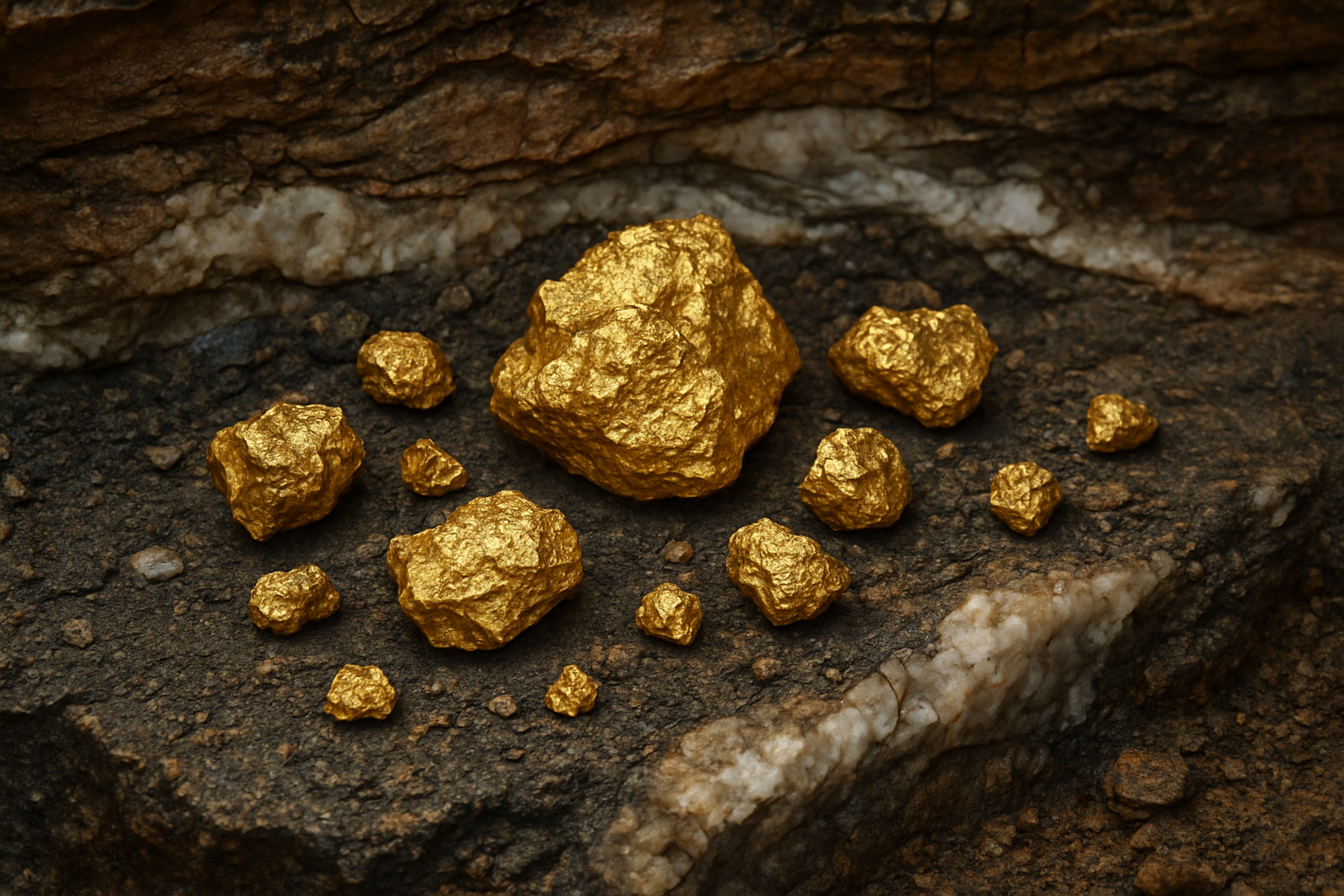
How Gold Nuggets Form Through Geological Processes
Gold nuggets are naturally occurring pieces of native gold that exist in their pure metallic form, uncombined with other elements within rock or sediment. These formations develop through several fascinating geological processes that scientists continue to study and debate.
The primary formation mechanism involves hydrothermal processes, where gold forms as clusters of crystals from extremely hot, mineral-rich water flowing through cracks and fissures in hard rocks. These heated fluids dissolve existing gold deposits and transport them through fractures in the rock. As conditions change—such as temperature, pressure, or chemical composition—the gold precipitates out and accumulates over time, eventually forming solid nuggets. This process often occurs alongside quartz formation, which explains why many nuggets contain quartz inclusions.
Supergene enrichment represents another significant formation pathway. Near the Earth’s surface, groundwater weathers and dissolves gold particles from existing deposits. As this gold-bearing water moves through fractured and weathered rock, environmental changes like pH shifts or encounters with organic matter cause the dissolved gold to precipitate and concentrate into nugget form.
Recent research has also explored bacterial activity as a contributing factor, with certain microorganisms helping concentrate gold from surrounding materials and facilitating precipitation into visible particles. While this theory requires further investigation, it adds an intriguing biological dimension to the formation of nuggets.
A 2007 study on Australian nuggets definitively ruled out speculative theories, including cold welding of smaller particles and in-situ precipitation, by demonstrating through crystal-structure analysis that nuggets originated from high-temperature formation deep underground, confirming their hypogene origin.
Where to Find Gold Nuggets Worldwide
Gold nuggets are discovered in specific geological environments where natural processes have concentrated these precious formations over millennia. Placer deposits represent the most productive locations, formed by watercourses that concentrate nuggets and finer gold particles through hydraulic action. These deposits occur where ancient rivers or glacial movements left behind gold-bearing gravel and sand, particularly near mountainous regions.
Riverbeds and stream environments offer excellent prospects for nugget discovery. Gold’s exceptional density causes it to settle in areas of slower water flow, where it accumulates in gravel bars and sediment deposits. The mechanical action of flowing water naturally concentrates heavier gold particles while washing away lighter materials.
Residual deposits form where original gold-bearing veins or lodes have weathered over time, releasing nuggets from their host rock. These locations often occur near exposed quartz veins in rock formations, where weathered material around ancient gold-bearing structures can yield loose nuggets.
Historically significant nugget discoveries demonstrate the global distribution of these formations. Australia’s goldfields, particularly in Victoria, have produced some of the world’s largest specimens, including the famous Welcome Stranger found at Moliagul in 1869. Alaska’s gold regions consistently yield nuggets, though typically with lower purity than those from Australia. Brazil’s Serra Pelada Mine produced the massive Canaã nugget, while California’s Sierra Nevada region contributed numerous substantial finds during the Gold Rush era.
Tailings piles from previous mining operations, especially those left by gold mining dredges, continue to yield nuggets as modern prospectors reprocess these overlooked deposits with improved techniques.
Identifying Authentic Gold Nuggets and Their Characteristics
Authentic gold nuggets possess distinctive characteristics that set them apart from other metallic specimens and help verify their authenticity. Color variations provide the first identification clue, ranging from bright yellow to deeper reddish yellow depending on trace-element content. The richer and deeper the orange-yellow coloration, the higher the gold content, allowing experienced prospectors to estimate purity through visual assessment.
Purity levels in natural nuggets typically range from 20K to 22K (83% to 92% gold by mass). Australian nuggets often achieve 23K or slightly higher purity, while Alaskan specimens usually fall at the lower end of this spectrum. Fineness measurements express this purity in parts per thousand—for example, “865 fine” indicates 865 parts gold per thousand parts total mass.
Physical characteristics reveal important formation clues. Authentic nuggets often display signs of abrasive polishing from stream action, creating smooth, rounded surfaces where water flow has worn away rough edges. Many specimens retain quartz inclusions or other lode matrix material, providing evidence of their hypogene origin from high-temperature underground formation.
Shape and texture vary considerably, from irregular pebble-like forms to flattened specimens with intricate surface patterns. Some nuggets exhibit branch-like structures or crystalline features, particularly those discovered closer to their original vein sources before extensive water transport.
Common impurities include silver and copper, which influence both color and overall composition. High silver content creates the alloy electrum, while copper contributes to reddish coloration. These trace elements can actually enhance value for collectors seeking unique specimens with distinctive appearance characteristics.
The weight-to-size ratio provides another authentication method, as gold’s exceptional density means genuine nuggets feel surprisingly heavy for their dimensions compared to other metallic objects of similar size.
Types and Sources of Raw Gold Available for Purchase

Certified Natural Alaskan Gold Nuggets
Alaska is one of the world’s premier sources of naturally occurring gold nuggets, formed over millions of years through geological processes. These certified natural nuggets originate primarily from placer gold deposits, where gold particles were weathered and eroded from their parent rock sources, then transported by glacial and water action to concentrated deposit areas. The core mineralization process follows the classic “source-transport-reservoir” pattern, with Alaskan nuggets typically ranging in particle size from 0.1 to 2 mm.
Alaskan placer gold exhibits distinctive characteristics that make it highly sought after by collectors and investors. The nuggets display varying shapes from round to irregularly angular, depending on their transport distance, with surfaces often covered by thin films of iron-manganese oxides that give them their characteristic patina. Since these gold particles exist as free native gold that coexists with other minerals only through physical adsorption or mechanical mixing, they can be recovered without complex chemical processing, maintaining their natural integrity.
The extraction process for Alaskan gold uses gravity separation, primarily employing dredgers with bucket elevators on floating platforms. Modern mobile gold washing plants integrate screening, washing, and gravity separation systems, achieving preliminary recovery rates exceeding 80% through simple spiral sluice methods. This efficient extraction process ensures that certified Alaskan nuggets maintain their authentic natural state while meeting rigorous quality standards.
Australian and North American Placer Gold
Australian and North American placer gold deposits represent extensive loose sedimentary gold deposits formed by river and glacial transport systems. These deposits form when gold elements undergo weathering and erosion processes, becoming transported by water or glaciers to low-lying areas where they accumulate in river bends, convex banks, or terraces where water flow velocity decreases.
North American placer gold, particularly from regions such as California and Colorado, shares geological characteristics with Australian deposits. Both sources feature gold particles that are readily liberated due to their loose sedimentary nature, significantly reducing beneficiation costs compared to hard-rock mining operations. The particle characteristics include varying sizes, predominantly between 0.1 and 2 mm, and shapes ranging from rounded to angular, depending on transport distance and geological conditions.
Australian placer gold deposits often occur in association with specific heavy minerals, including magnetite and ilmenite, in alluvial environments, while coastal placer deposits frequently co-occur with zircon and monazite. This mineral association provides ideal conditions for gravity separation, enabling efficient recovery with equipment such as shaking tables, centrifugal concentrators, and jigging machines.
The extraction methodology for both Australian and North American placer gold involves three-stage processing systems. Initial washing removes surface clay and impurities using rotary scrubbers or trommel screens, followed by gravity separation, which utilizes density differences to concentrate gold-bearing heavy sands. Final selection stages employ magnetic separators and shaking tables to achieve tailings rejection rates exceeding 95%.
Ethically Sourced Artisanal Mined Gold
Ethically sourced artisanal gold represents a growing segment of the raw gold market, focusing on responsible mining practices that support local communities while maintaining environmental standards. This category encompasses gold extracted through small-scale operations that prioritize sustainable methods and fair trade practices, often utilizing traditional techniques combined with modern environmental safeguards.
Artisanal mining operations frequently target both placer and vein gold deposits using methods that minimize environmental impact. For placer deposits, traditional gold panning techniques remain prevalent among small-scale miners, supplemented by portable washing equipment and metal detectors that improve precision and recovery rates. These methods maintain the natural characteristics of gold nuggets while ensuring responsible extraction practices.
Vein gold operations in artisanal settings typically focus on high-grade deposits ranging from 3-15 g/t, with some rich sections reaching 30-50 g/t. The extraction process requires careful attention to liberation degrees, ensuring gold mineral liberation of ≥90% through controlled crushing and grinding operations. This approach maintains ore quality while supporting sustainable mining practices that benefit local communities.
The certification process for ethically sourced artisanal gold includes verification of mining methods, environmental compliance, and fair labor practices. These standards ensure that purchased gold meets both quality requirements and social responsibility criteria, providing buyers with confidence in their investment while supporting responsible mining communities worldwide.
Gold Nugget Pricing and Market Factors

Why Natural Nuggets Command Premium Prices Over Market Gold
Natural gold nuggets command significantly higher prices than standard gold bullion due to their extraordinary rarity and unique formation process. While gold bars are mass-produced and readily available, gold nuggets represent only 2% of the total gold discovered annually. This scarcity creates a supply-and-demand imbalance that drives premium pricing well above spot gold prices.
The rarity factor becomes even more pronounced when considering that most historically discovered nuggets were melted down for bullion production. The appreciation for natural, unprocessed nuggets has emerged only in recent decades, making existing specimens increasingly valuable. Some of the largest nuggets ever found, including the famous Welcome Stranger nugget, were unfortunately melted shortly after discovery before collectors recognized their true worth.
Unlike gold bars, which are valued primarily on weight and purity ranging from 99.5% to 99.9%, nuggets possess intrinsic characteristics that transcend mere gold content. Their natural formation process, unique appearance, and provenance contribute to values that can reach two to three times the spot price of gold for exceptional jewelry-grade specimens.
How Size, Weight, and Purity Affect Pricing
Size represents one of the most critical factors in determining nugget value, with larger specimens commanding exponentially higher prices due to their extreme rarity. Large nuggets are particularly precious because natural erosion forces continuously break them down into smaller flakes and pieces over time, making substantial intact nuggets increasingly scarce.
Weight directly influences base pricing calculations, though unlike bullion, nuggets aren’t priced solely on their gold content. The seller typically considers weight alongside other premium factors when establishing market value. While purity affects gold bar pricing significantly, nugget purity becomes less influential as long as the specimen displays ordinary purity levels. However, higher purity can enhance a nugget’s natural luster, potentially increasing buyer appeal.
The shape and crystalline structure of nuggets dramatically impact pricing beyond size considerations. Aesthetically appealing crystalline formations command much higher premiums than larger specimens without distinctive features. Crystalline gold nuggets, formed near their original source without erosion exposure, represent the rarest category and typically sell for three to six times spot gold prices.
Gold in quartz specimens add another pricing dimension, where visible crystalline gold protruding from natural quartz rock creates extremely valuable collectibles. These specimens are priced not primarily by gold content but by rarity, beauty, location, and overall desirability among collectors.
Starting Prices from $50 to Thousands of Dollars
The pricing spectrum for natural gold nuggets varies dramatically based on type, quality, and rarity. Placer gold nuggets, the most common variety formed by the natural erosion of gold veins, represent the entry-level category, with jewelry-grade specimens starting around $50 for smaller pieces.
Clean, hand-selected jewelry and investment-grade placer gold nuggets command significant premiums over spot gold prices, while truly exceptional specimens can reach two to three times spot price. Very large or exceptionally rare placer nuggets may command even higher multiples, with pricing extending into thousands of dollars.
Crystalline gold nuggets occupy the premium tier, typically demanding three to six times spot gold prices due to their extreme rarity. These specimens, found very close to their formation source without erosion exposure, maintain their original coarse crystalline form. Larger or particularly rare crystalline pieces can command prices well into the thousands.
At the apex of nugget pricing are gold nugget crystals featuring distinct crystal structures such as octahedrons, cubes, trigons, or dendritic formations. These specimens are so rare that they’re often considered priceless, with many sellers not even listing weights due to their collector value transcending gold content worth. The most exceptional crystallized gold specimens with multiple crystal types can reach tens of thousands of dollars, representing the ultimate in natural gold rarity and beauty.
Quality Assurance and Authentication
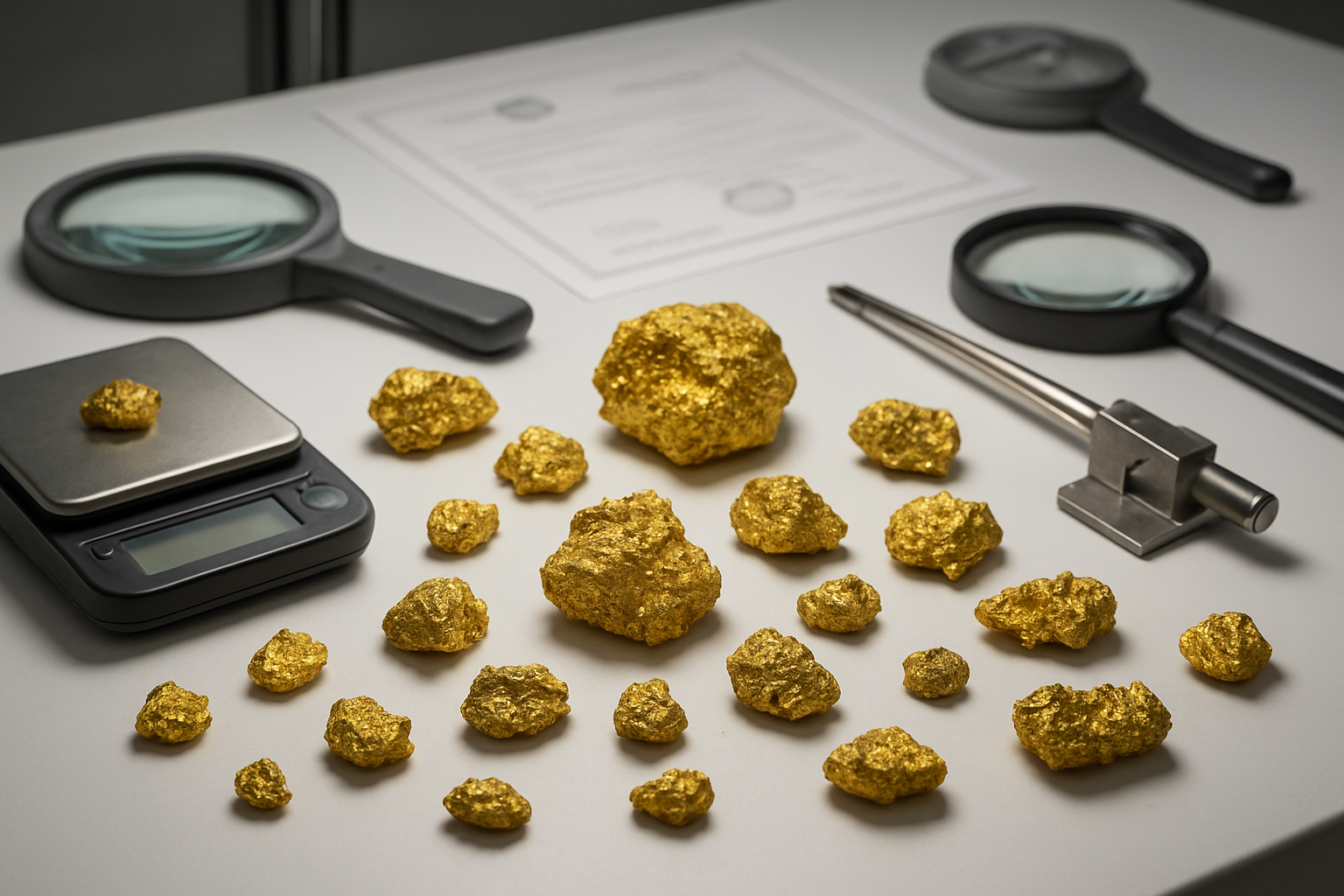
Certificates of Authenticity for Every Purchase
Professional raw gold dealers provide comprehensive certificates of authenticity with every purchase to ensure complete buyer confidence. An assay certificate serves as the gold’s identity card, formally documenting essential specifications, including purity levels (such as .9999 fine gold), precise weight measurements (typically in troy ounces), the refiner or mint of origin, and unique serial numbers when applicable. These certificates function as birth certificates for your gold, issued and sealed directly by trusted refiners operating under global good delivery standards.
The certificate includes critical verification elements, such as the refiner’s official logo, certified assayer signatures, barcodes or serial numbers, and, often, holographic seals or advanced security features. Color-coding and branding vary by refiner, but core documentation remains consistent across the industry. Only established refiners like Asahi Refining, PAMP Suisse, Valcambi, and The Royal Canadian Mint issue these authoritative certificates, ensuring acceptance by major vaults, dealers, and exchanges worldwide.
Professional Testing and Verification Services
Now that we understand the basics of certificates, professional testing services provide additional layers of verification beyond standard documentation. Reputable dealers employ non-destructive testing methods, such as XRF (X-ray fluorescence) analysis, to confirm the metal composition without damaging the gold. Weight verification with precision scales ensures compliance with stated specifications, while dimensional measurements confirm authenticity against known standards.
Professional verification includes matching serial numbers between the physical gold and its accompanying certificates, inspecting the integrity of tamper-evident packaging, and validating refiner hallmarks and stamps. These comprehensive testing protocols provide immediate visual verification of authenticity while maintaining the gold’s condition and resale value. Testing documentation becomes part of the permanent record, supporting future transactions and insurance requirements.
Guaranteed Authentic Products with Documentation
With professional testing complete, guaranteed authenticity represents the highest standard of quality assurance in raw gold sales. Complete documentation packages include original assay certificates, professional testing results, purchase receipts, and photographic records of both certificate and gold surfaces. Serial number matching between certificates and physical gold ensures documentation continuity and prevents fraud.
Guaranteed products maintain tamper-evident packaging integrity, preserving both authenticity verification and surface condition. When packaging arrives damaged or compromised, immediate documentation with photographs protects the buyer’s interests before any further handling occurs. This comprehensive approach to authentication and documentation provides the strongest foundation for confident gold ownership, simplified resale processes, and long-term investment security. Complete documentation strengthens trust with future buyers and supports premium resale pricing compared to gold lacking proper authentication credentials.
Purchasing Options and Investment Opportunities

Individual Collector Pieces and Specimen Nuggets
Now that we have covered the quality and authentication aspects, it’s important to understand the diverse purchasing options available for raw gold investments. Individual collector pieces represent the premium tier of natural gold nugget investments, specifically targeting collectors and investors seeking unique specimens with exceptional characteristics. These jewelry/investment-grade nuggets command higher premiums due to their rarity, aesthetic appeal, and collectible value.
High-quality specimen nuggets are carefully hand-selected for their distinctive features, including unusual shapes, exceptional purity, and remarkable size. Large natural gold nuggets are rarer than diamonds, making them highly sought-after collector’s items similar to rare gold coins. Most historical gold nuggets were melted down for processing, but only in the past 25 years have investors begun to collect and hoard these natural treasures.
Individual pieces offer flexibility for smaller investors, as natural gold nuggets can be purchased in sizes as small as a tenth of a gram, unlike traditional gold coins and bars, which typically come in one-ounce or larger denominations. This accessibility makes specimen nuggets an attractive entry point for new precious metals investors and a unique addition to seasoned collectors’ portfolios.
Bulk and Wholesale Gold Purchasing Options
With this market accessibility in mind, bulk purchasing presents significant opportunities for serious investors and dealers. Nuggets by Grant offers comprehensive wholesale options designed to accommodate various investment scales and strategic objectives. The company positions itself as providing “the lowest prices in the world for gold nuggets, placer gold, artisanal mined gold, and eco-friendly investment options.”
Wholesale purchasing enables investors to acquire larger quantities of ethically sourced gold nuggets directly from placer miners and small artisanal mining communities, primarily in North America and Australia. These bulk options cater to investors seeking to diversify their precious metals portfolios with natural gold while supporting sustainable mining practices.
The wholesale program emphasizes the ethical and unique qualities of the gold they source, reflecting current market conditions while providing built-in savings for direct purchases. This approach eliminates middleman markups typically associated with traditional gold dealers, allowing investors to acquire premium natural gold at competitive prices.
Investment Discounts at Higher Purchase Volumes
Previously mentioned bulk opportunities become even more attractive through structured volume discount programs. The company offers progressive savings at specific breakpoints: $10,000, $50,000, $100,000, $250,000, $500,000, and $1,000,000 per year. These tiered discounts reward larger investments with increasingly favorable pricing structures.
Higher volume purchases provide institutional investors and serious collectors with substantial cost advantages while securing access to premium inventory. The discount structure encourages long-term relationships and repeat business, creating mutual benefits for both investors and the supplier.
For investors considering substantial gold nugget investments, scheduling a consultation with Grant, the company owner, at 530-712-5467 allows for a personalized discussion of investment goals, volume requirements, and customized pricing arrangements. This direct access ensures that large-scale investors receive appropriate attention and pricing commensurate with their investment levels.
The volume discount system recognizes that serious precious metals investors require both competitive pricing and reliable supply chains, particularly given the increasing rarity of high-quality natural gold nuggets as easily accessible deposits become depleted.
Customer Service and Support Benefits

Expert Guidance in Selecting Perfect Gold Nuggets
When investing in raw gold, having access to expert guidance makes the difference between a wise purchase and a costly mistake. Professional gold dealers employ knowledgeable staff who understand the intricacies of gold nugget quality, authenticity, and market value. Unlike commission-based salespeople who might push higher-priced items, the best dealers ensure their staff provides unbiased information to help you make informed decisions.
Expert advisors can walk you through the factors that affect gold nugget value, including purity, weight, and geological origin. They understand how different sources and formations impact both collectible appeal and investment potential. This expertise becomes invaluable when selecting pieces that align with your specific investment goals or collecting interests.
Fast Shipping and Reliable Customer Communication
Now that we’ve covered the importance of expert guidance, professional gold dealers prioritize efficient service delivery through fast shipping and reliable communication channels. Established dealers offer free insured shipping, ensuring your valuable gold nuggets arrive safely without additional costs eating into your investment.
Professional wrapping and insured shipping through trusted carriers like USPS and FedEx Express provide peace of mind throughout the delivery process. Many reputable dealers also maintain live pricing systems that update every 30 seconds, allowing you to make timely decisions based on current market conditions.
Communication transparency remains crucial, with established dealers providing multiple contact methods, including phone, fax, and dedicated service managers who can answer specific questions about your purchase and shipping status.
60-Day Return Policy and Satisfaction Guarantee
With shipping and communication standards established, the most reputable gold dealers back their products with comprehensive satisfaction guarantees. A generous 60-day return policy demonstrates confidence in product quality and commitment to customer satisfaction. This extended timeframe allows adequate opportunity to authenticate your gold nuggets and ensure they meet your expectations.
Satisfaction guarantees reflect the dealer’s commitment to building long-term relationships rather than focusing solely on individual transactions. The highest repeat business ratios in the precious metals industry often correlate with dealers who prioritize customer satisfaction over short-term profits.
Established dealers with decades of experience maintain excellent relationships with business bureaus and accumulate hundreds of verified customer reviews, providing additional assurance of their commitment to customer satisfaction and ethical business practices.

Raw gold nuggets represent a unique intersection of natural wonder, investment opportunity, and collectible treasure. From understanding their geological formation to navigating pricing factors influenced by rarity and market conditions, purchasing authentic gold nuggets requires careful consideration of quality assurance and proper authentication. Whether sourcing from Alaska’s pristine wilderness, Australia’s rich deposits, or North America’s historic mining regions, each nugget tells a story millions of years in the making.
The investment potential of natural gold nuggets extends beyond traditional gold pricing due to their scarcity and collector appeal. With reputable dealers offering certificates of authenticity, comprehensive customer support, and ethical sourcing practices, buyers can confidently enter this specialized market. For those ready to own a piece of Earth’s geological history while potentially securing a valuable investment, certified natural gold nuggets offer an opportunity that combines passion with portfolio diversification.